Showing posts with label networks. Show all posts

15.4.15

Service Design Cork Meetup - Inaugural Session


Wednesday April 15th at CIT James Barry gallery. Facilitated by Heather Madden and Catherine Murphy. www.cit.ie/servicedesigncork #servicedesigncork

What is service design?
The ongoing issue is understanding what this is all about! User involvement is the central element to improving existing services and creating new ones at various levels of complexity. These can range from relatively simple ones like entertainment and professional services right up to the mammoths of education, public service and healthcare. Example methods are service blueprints and personas.

A light bulb moment

Heather then told the story of how as a business analyst looking for ways to improve the admissions process, coming across a project at the University of Derby project it was her "light bulb moment". Here was a solution to the challenge.

11.3.14

Trailblaze – "We Need to Talk about Ireland" Event St. Paddy's Day 2014

Just sent this brochure to print and very excited about tuning into RTE player on Paddy's Day to watch the event live. Cover image by Brendan Canty at Feel Good Lost.

4.2.14

What I learnt from a Panel Discussion on Creative Entrepreneurship – Quarter @ TDC – Makeshift Ensemble at the Triskel, Cork.


Saturday afternoon Makeshift Ensemble and Theatre Development Centre (TDC) held "Quarter@TDC 1214" a day of creative events at the the Triskel Cork. It kicked off with a panel discussion on creative entrepreneurship. 

Lovely tea and cakes were laid on and a hanging installation by Pauline Gibbons definitely warmed the tone of the space. Eszter Nemethi, hostess of Makeshift Ensemble began by introducing the panel:

Colm O'Herlihy – Starter of the Mountain Dew festival Macroom (Coming to Cork this year)
Pat Kiernan – Artistic Director and founder of theatre company Corca Dorca
Emer Ní Chíobháin Sample Studios, Cork
Dave Calnan founder of the all-ages venue, The Kino
Rhona Flynn – Founder Cork Community Printshop

I was happy to feel a sense of a excitement about stuff happening in Cork. Spaces around city have become available to use. "Cork is amazing right now." (Colm). 

Question "What was the initial motivation for what you have done?" 
It seemed to be a general case of necessity after leaving college ... Colm spoke of organically starting off the Mountain Dew festival with his friends... Pat and Aoife needed a way to keep doing what they wanted to do by setting up collaborative resources ... Dave saw a lack of a venue for under-age music fans. Rhona is thinking strategically to maintain the long term sustainability of her own livelihood and practice. 

Much of the debate centred around making a living, the choices and issues around that.  The current options for practising artists are:

#1. Go on the the dole
PRO: no compromise to your work.
CON: you can't be seen to be in business or do commercial work without getting cut-off. Your long hours are not valued. 

#2. Get Funding :
PRO: an income.
CON:  you are vulnerable to changes in funding structures reactions of funding bodies and politicians to the work, you may have to change the work to maintain funding eligibility.

#3. Commercialise your work : PRO sell the work to get an income.
CON: adaptation or compromise of work.

#4. Teach / work a regular job : PRO: an income,
CON: some qualification requirements. Job scarcity. Current embargo in public sector. 

Funding is a generally accepted option but as Pat Kiernan said there is always only a certain amount and a far greater demand. 

Rhona asserted her support for funding but asked about long term sustainability – if someone is planning a family, house, school runs (a life)… how can you plan or depend on funding for that? 

Working for free – 14 to 16 hrs a day, there is no value on your time. You have to get paid. Self subsidisation is a false economy... People can't maintain that. There is a belief that the dole is an alternative arts council. A wage for artists? – Get to work!!!

How can you maintain an independent practice without compromising the work and making a living?

Option #5 – Be a creative entrepreneur :
PRO: long-term financial sustainability and producing work on your own terms.
CON: no guide book to hand, new terrain, requires diversifying your skills requires taking responsibility and risks. Hard work. 

Question: "So what is creative entrepreneurship?"

Dave Calnan's succinct response was: "Making stuff happen"

The panel agreed that we all need to move away from preconceptions of what an entrepreneur is (business suits briefcases, wheeling and dealing)…. It's more about sharing resources and setting up businesses using our artistic creative skills and ideas. Colm mentioned that this requires "diversification" of work and skills. 

Collaboration is the new way to work rather than competition of old. By building a network of mutual support we can create opportunities for each other. There is benefit of being in a group. The word "ecology" was mentioned which seemed to sum that up nicely.

The result is a cultivation of independence of your own work and empowering others to do the same. Rhona called for a responsibility for our ourselves, our futures and the sustainability of our practices.

Some advice:

Get off the dole:
Apply for the Back to work scheme and do a FÁS start your own business course. Check out the Workspace scheme from the arts council. 

Change the system
Petition politicians for legislative change. Check out the National Campaign for the Arts - the dole and artists practice.

Be clear about your aim
Rhona urged the room: paraphrasing her: "You have to be so so clear about what you want - to get things done especially through the hard times. Have a clear focus for what you want to get out of it. One of the things that stops people from taking action is that their aims are too general and not specific enough."

See the bigger picture
Create things to give back - provide things to make the things. Different kinds of audiences can have different finding streams. Question and brainstorm the potential and possibilities of your project.

Communicate
I asked the crowd to define the value and worth of their work. Communicate to those outside of your knowledge circle. Widen the demand for the work by selling and persuading people on the value for them. 

Listen. 
Aoife from Artlink had the final word: Go beyond your own concerns and ask what you can do for others by listening to what is needed. 

Question "What stops people from doing this?" 
I didn't take notes for that … if you were there too maybe you could help fill in the rest? 

So afterwards a few of us camped at the roundy table in Gulp'd, talked art inspiration and invented ideas for schemes and dreams.

(Quarter is a tri-monthly mini arts festival by Makeshift Ensemble. The next event is on 03/05/14 @TDCcork  facebook.com/quartercork)

Leave a comment on what / how you heard this! It would be great to add further links to resources mentioned. 

21.9.11

What is the Technology of Spirituality?


 Living in a monastry slash commune for three months was fascinating and many times overwhelming. From a visual anthropologist's viewpoint, there was a mass of activity. People weren't sitting round on their bums in general, but were carrying out a wide range of practices within and without the temple environment. Here I made a tentative and rough inventory of what I could see, which was complex and subtle.

20.7.10

Richard Florida – Who's Your City?

I really did say to myself in 2004 " It doesn't matter where I do my MA, it's more about what I do and what I want from it". Well, ahem, I discovered that I got that so wrong. It did matter, and it does matter where I live. A friend of mine, who was also on that course was fascinated by how the city environment affects us, and did an amazing project on psychogeography. Anyhows, I also realise the power of place when I check out the hits to one of my sites and see that there's something about California, Texas and New York that seems to return to it. I like the Monocle 'Top 25 Most Liveable Cities', because I like the magazine. So, when I came across this book I immediately ordered it:
It’s a mantra of the age of globalization that where you live doesn’t matter ... According to Richard Florida, this is wrong. Place is not only important, it’s more important than ever... Globalization is not flattening the world; on the contrary, the world is spiky. Place is becoming more relevant to the global economy and our individual lives. The choice of where to live, therefore, is not an arbitrary one. It is arguably the most important decision we make, as important as choosing a spouse or a career. In fact, place exerts powerful influence over the jobs and careers we have access to, the people meet and our “mating markets” and our ability to lead happy and fulfilled lives.
On his creative class website, are interesting data maps and a nice questionnaire to help you compare your own choice of top cities. Below, a global map of innovation locations, and personality areas in the States.

8.6.10

RSA Animate - The Secret Powers of Time


Professor Philip Zimbardo conveys how our individual perspectives of time affect our work, health and well-being. Time influences who we are as a person, how we view relationships and how we act in the world.
Lots more of these videos here. Super engrossing.

And, following up from a recent post about mirror neurons and the scientific validity of empathy, here is an appropriate video from the series expanding on this. It is based on a lecture by Jeremy Rifkin.

23.2.10

Julie Michel - My Way


Before I first moved to London, I went to my local library and photocopied all the pages of the area around where I would go to college, and taped them all together into a kind of monster wall hanging. Fluorescent filled areas for parks and bits of interest, and village areas ringed. Staring at the areas and getting familiar with the names was essential for beginning the trawl through rental adverts. So when I came across these maps from Julie Michel, it all came back to me. the personalisation of an area to visit with stickers and interventions. She has found some neat ways of folding the maps too.... so check out the rest of the site as well.

8.2.10

Beste Miray Dogan — Mapenvelop


Oh I do love an indexhibit site. I do I do. There's always something wonderful to discover in a template place, that is filled lovingly. So, via something called 'radar' in tumblr, I stumbled onto this beautiful and witty envelope. Neat idea!

3.11.09

Johnathan Harris – World Building Manifesto


Life/work can be lonely, a struggle, and very confusing at times. But then someone comes along and in their own way they speak a truth that inspires and resonates. You realise that many others battle with similar issues but some have verbalised it eloquently. Take a read of this presentation given last week. Thanks Mr. Harris.

16.9.09

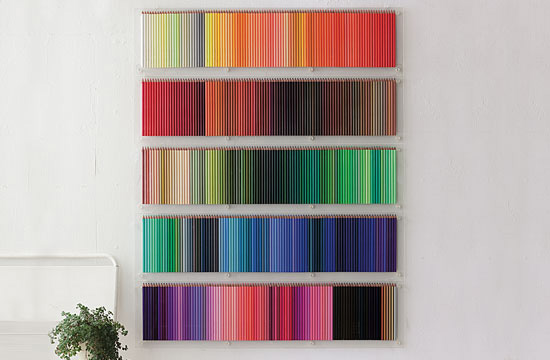
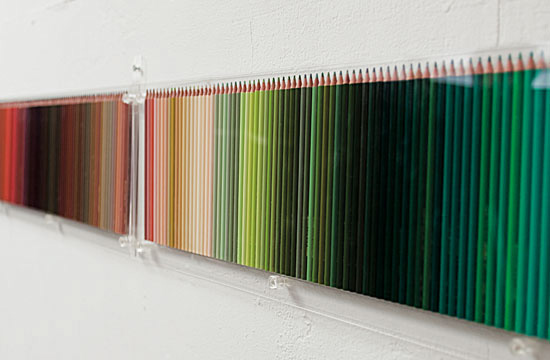
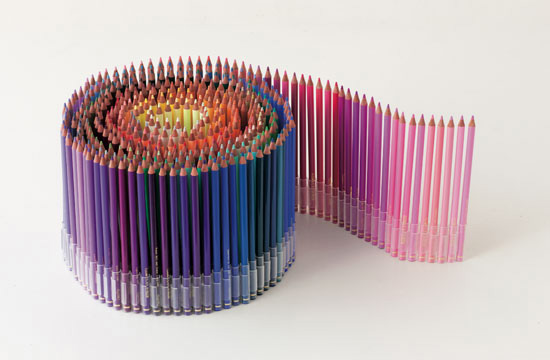
500 Pencils

Felissimo has designed this range of pencils for social designer. Each one is named individually. You can't buy the whole 500 in one go: but over 20 months. Like my old Quest magazines, or your favourite subscription magazines.... well, kind of.

30.7.09

Cargo Collective


Cargo is a web publishing (CMS) and community-building platform currently in development. It powers a variety of creative communities in the fields of Education, Design, Research, and Conceptual Art.

8.7.09

Ben Fry – All Streets

Fry has mapped all of the streets in the lower 48 United States: an image of 26 million individual road segments. No other features (such as outlines or geographic features) have been added to this image, however they emerge as roads avoid mountains, and sparse areas convey low population.

7.7.09

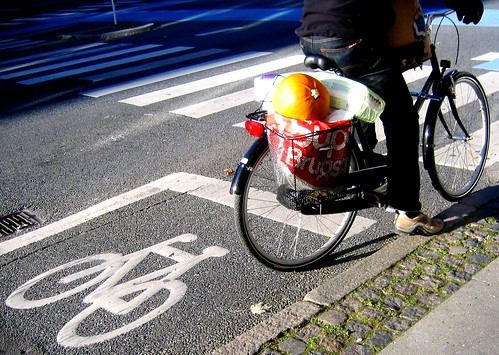
Copenhagen Bicycling Culture


Study of Heathrow - Ian Carr

This study is focused on uncovering the noise created by the vast network hub that is Heathrow Airport, specifically looking at the sources which create that noise, by breaking down the noises into visual format. www.iancarr.net


Forum for ideas and social enterpreneurship


The Ideas Project

22.6.09

Jan Chipchase

Researching for Nokia, Jan Chipchase has the enviable job of travelling the world to discover how people live, and how technology is used and accommodated internationally. The future perfect blog... a collection of insights, thoughts and snapshots from those trips.

16.2.09

Your own social network

Ning seems to have a lot going for it: a merge of facebook, flickr, blogspot, online chat and events calendar ... As a private version of facebook, this is clearly the future for social networks: we are many people and many worlds at once.

21.8.08

On Memory and remembering

Lately, I have been reconsidering the use of a reflective diary. Up to now, for me, it has been hand scribbled notes in a book made in binding class, or a little black moleskine, or sometimes typed into project notes or generally left to sent email archive. These remain unfiltered and unaccessible, and frankly, very old-school ineffective. I then stumbled on rememble.com which is a lovely MA project by Gavin O'Connell and developed to a web 2.0 site last year. Its fun to play with. Alan Sekers wrote in a blog there: "A memory is not the same as what is being remembered." This spun me into the whole area of blogging which hasn't been on my personal radar up to now, but which would be an ideal way to set up a relevent diary: searchable, digital, organised, outward facing and spacious.